
Founder Curious? Making the Leap
How to go from building for someone else to building your own - a tactical field guide for founder-curious operators

By Nisha Dua, BBGV
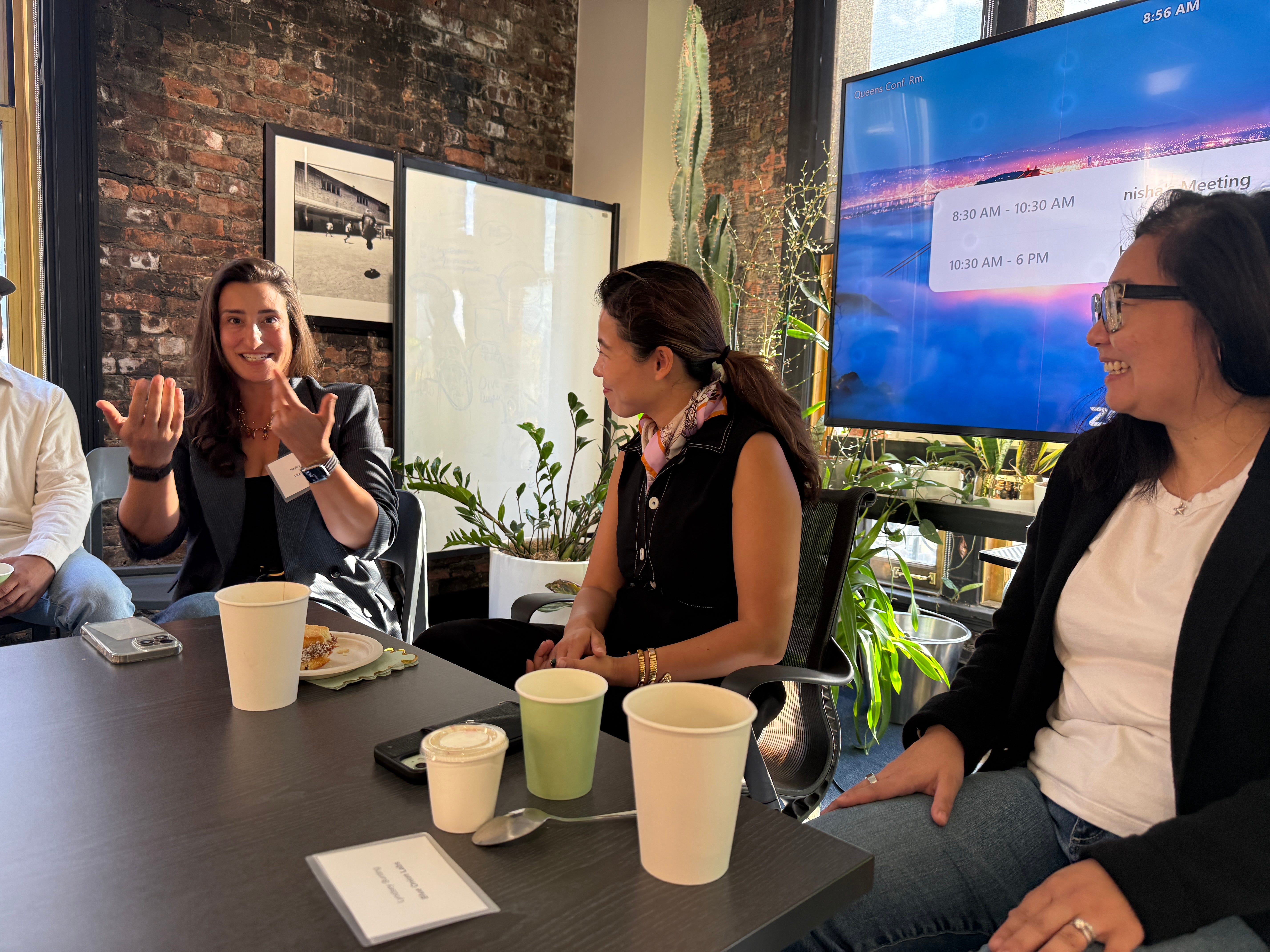
Last week, for our 7th (!) BBG Ventures Breakfast Club we gathered a room full of operators from companies like Notion, Stripe Justworks, Datadog, Google DeepMind and Ramp to hear from operators-turned-founders on how they grew curiosity into conviction. Two founders who’ve made the jump - Nancy Li Smith, founder & CEO of Boop (ex-BrightAI, Meta), a BBGV portco, and Lyndsey Bunting, Co-founder & CEO of Blue Onion (ex-Birchbox, Resonance) shared the playbooks that got them from “why doesn’t this exist” to “I’m doing it.” And in true founder fashion, the insights were as much about systems as they were about psychology.
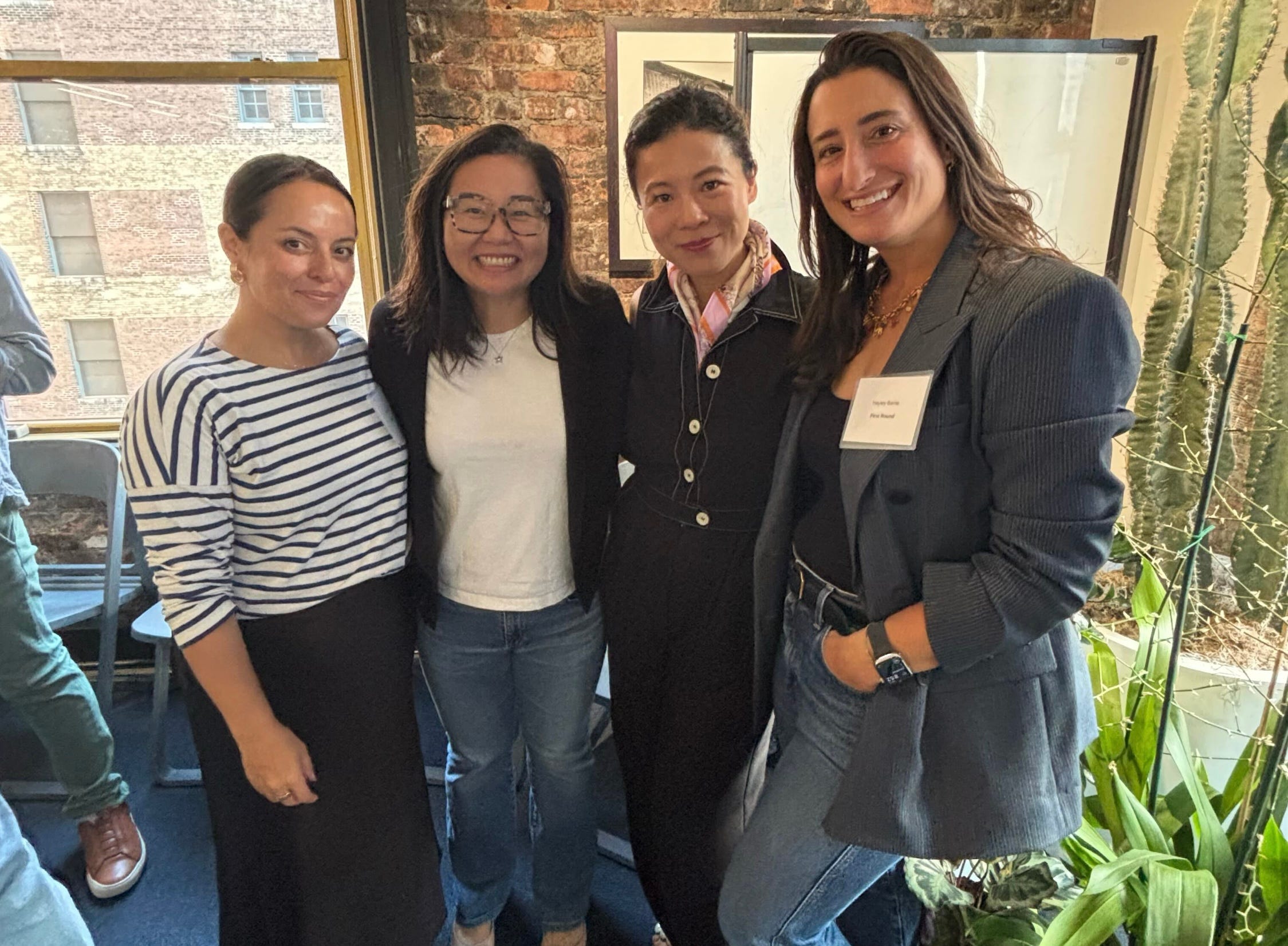
Thanks to our co-host Hayley Barna at First Round Capital and the support of our friends at Silicon Valley Bank we brought an incredible group of operators together for a conversation that was both tactical and raw.
The “Aha” Moment: When Frustration Meets Expertise
Every founder story begins with an itch that won’t go away - but what stood out about Nancy and Lyndsey was why they were qualified to scratch it.
Lyndsey’s aha was born in Excel. As CFO at Birchbox and later Resonance, she spent long nights reconciling messy finance data. Her moment came when she realized: “I simply can’t do this one more time manually.” She started consulting for brands to test whether the pain was universal - it was. That fractional work became her customer discovery engine and ultimately the genesis of Blue Onion, the data backbone for AI-powered finance teams.
Nancy’s aha came on her honeymoon in Venice, when she found herself hunching over Google Maps trying to plan dinner. “I just wanted a trusted friend’s itinerary I could copy,” she said. As a product leader who had built AI platforms at Bright AI and for Meta’s smart glasses, she knew she could leverage her professional experience in AI, and her accidental travel influencer status on Instagram to deliver on the promise of personalization for travel. In her heart she was too impatient with the corporate structure - twelve months of reviews just to get something approved. She pulled together a team of great engineers who shared her vision and decided to build it herself. That became Boop: an AI-native social travel platform for shareable, shoppable itineraries.
Investors like us at BBGV, and Hayley at First Round, love investing in the founder-archetype of subject-matter expert who finally decides to solve the problem they keep bumping up against.
Validate Like an Operator
Every aha moment needs validation before it can start on the road to becoming a company, but validation is the uncomfortable part of moving beyond theorising, writing a memo or a deck - it’s about getting out there and demonstrating proof under constraints.
In Lyndsey’s case, that came from fractional work that she treated like structured research. She sent hundreds of cold emails, leveraging her experience at Birchbox to get 20 real conversations. Using PDF mock-ups she promised herself: “If I get five “yes, I’d buy this” responses I’ll do this.” After the first five, she continued to use her fractional work to build her network and test her selling motion.
Nancy tested her idea through concentric circles of potential users - first her female founder poker group, then friends across generations, then senior travel executives like Marriott’s former president. When grandmothers and Gen Z alike said, “Yes, I’d use this,” she knew she was onto something.
Both founders turned curiosity into conviction through motion - not by waiting for the perfect signal, but by collecting enough data to silence doubt. Lindsey said it perfectly: “Action builds momentum.” Her point? Taking action (e.g., consulting to sell services) reduces fear, creates progress, and attracts support:
“Once you start saying it out loud and doing it, momentum compounds.”
And for investors, when you’re pre-product it’s that early learning velocity that counts.
Co-Founder or Not: It’s About Trust
Do you need a co-founder to get started or not? Different strokes for different folks - but at the end of the day it’s about trust.
Lyndsey’s first YC application was rejected because she lacked a technical co-founder. The second time, she had two - one from her college network, one from her friend group - but she literally moved them all (and their spouses) to a house to live together for three months in North Carolina during YC’s remote batch (COVID): “It was like adult summer camp but we learned how to communicate, argue, and ship. They also got to sit in the background of all my sales pitches” Her best advice for selecting a co-founder? “Be explicit about what you’re great at - and what your partner must be great at.”
Nancy, meanwhile, saw the ups and downs of co-founder relationships. She ran her first sprints solo - contracting engineers she’d known for years. Those part-time trials turned into full-time hires once they’d experienced her velocity firsthand.
Whether you find a partner or go it alone, the through-line is the same: test the relationship before you formalize it. Which leads us to …
First Hires: Contracting as Dating
Hiring in the early days is less like the big company HR processes you’re familiar with and more like dating - chemistry, trust, and trial periods are paramount.
Nancy brought on her first five teammates through long-term friendships and short-term contracts: “Everyone had known each other for a decade. We’d been to each other’s weddings. That kind of trust is priceless when you’re patching holes on a Titanic.”
Not everyone is lucky enough to have the perfect team surrounding them. Lyndsey took the opposite approach for her first hire outside her co-founders: a structured process, 20+ interviews, multiple candidates (not just 1 or 2), clear scopes, and tough conversations. “You have to be able to talk about what’s broken,” she said. “You’re not just hiring skill; you’re hiring someone who can tell you when you’re wrong.”
At the earliest stages you need people you can iterate with through the hard times, both emotionally and operationally.
Execution: Less is more. Speed comes from focus.
Both our operators-turned-founders described building a startup from zero as an exercise in “controlled urgency.” Two themes that stuck out:
Ruthless prioritization. We talk about this with our founders all the time - less is more, especially at the pre-seed stage. Nancy nailed it with a practical example: she calls her upcoming launch a “Ruthless Beta” - a launch that strips the product to the smallest set of features users desperately need/love and that are uniquely differentiated.
Speed comes from focus. That ruthless prioritization allows you to ship fast. On Nancy’s team every engineer owns one or two features per week - less is more - and must demo something they’re proud of every Friday. The narrow scope drives speed in learning on the core experience: ship, learn, repeat.
At the earliest stage the biggest advantage is creating a culture where learning loops are faster than, and outweigh, fear.
The Founder OS
Tactics are one thing, but psychology is another - can you withstand the hits a founder takes? The hits that start from Day 1. Switching from the comfort of operating to owning requires a new operating system: one that rewires how you deal with uncertainty.
Fear of rejection. Lyndsey took 100+ investor meetings post-YC. Her advice? Lean into it - volume is the fastest way to grow a thick skin, and develop trust in yourself. “You will hear opposite opinions from equally smart people,” she said. “At some point, you stop chasing a consensus and start trusting your conviction.” Use the no’s to gather data. And remember, whether they are an investor or customer - you only need one yes to get you started, and “it usually leads to the next yes.”
Fear of imperfection. Nancy, raised on 10 years of piano lessons and perfectionism, said the biggest unlock was shedding it. “You can’t build if you’re scared of the messy version. “Good enough for now” is the only way to move forward.
The stories we tell ourselves. We all feel we’re not good at something. Often, you can fill that gap with a co-founder or your first hire - but you can also rewrite your own narrative. Lyndsey trained herself to be good at sales, by telling herself that demonstrating confidence in her early product - which was essentially her consulting work - was simply telling the truth.
Honesty about risk. Before launching Boop, Nancy joined Bright AI with a secondary motive - to learn from a serial founder. “I didn’t feel ready to be a CEO; I didn’t know how to run payroll or fundraise,” she said. “So I picked a company where I could learn from someone who did.” That apprenticeship was an accelerant - and proof that testing the waters counts as progress.
So - how do I know it’s time to make the leap?
If you have that impatience, that hunger to change something, combined with frustration and clarity about a problem, a restlessness that can’t be contained by corporate timelines or multi-level manager approvals - that’s your sign that you may be ready to make the leap.
If you’re an operator building today - reach out: we’d love to talk! nisha@bbgv.com
Our founders said it best: Momentum is the cure for doubt.